

Home Care
A Beautiful, Firesmart Yard: Defensible Space That Gives You Peace of Mind
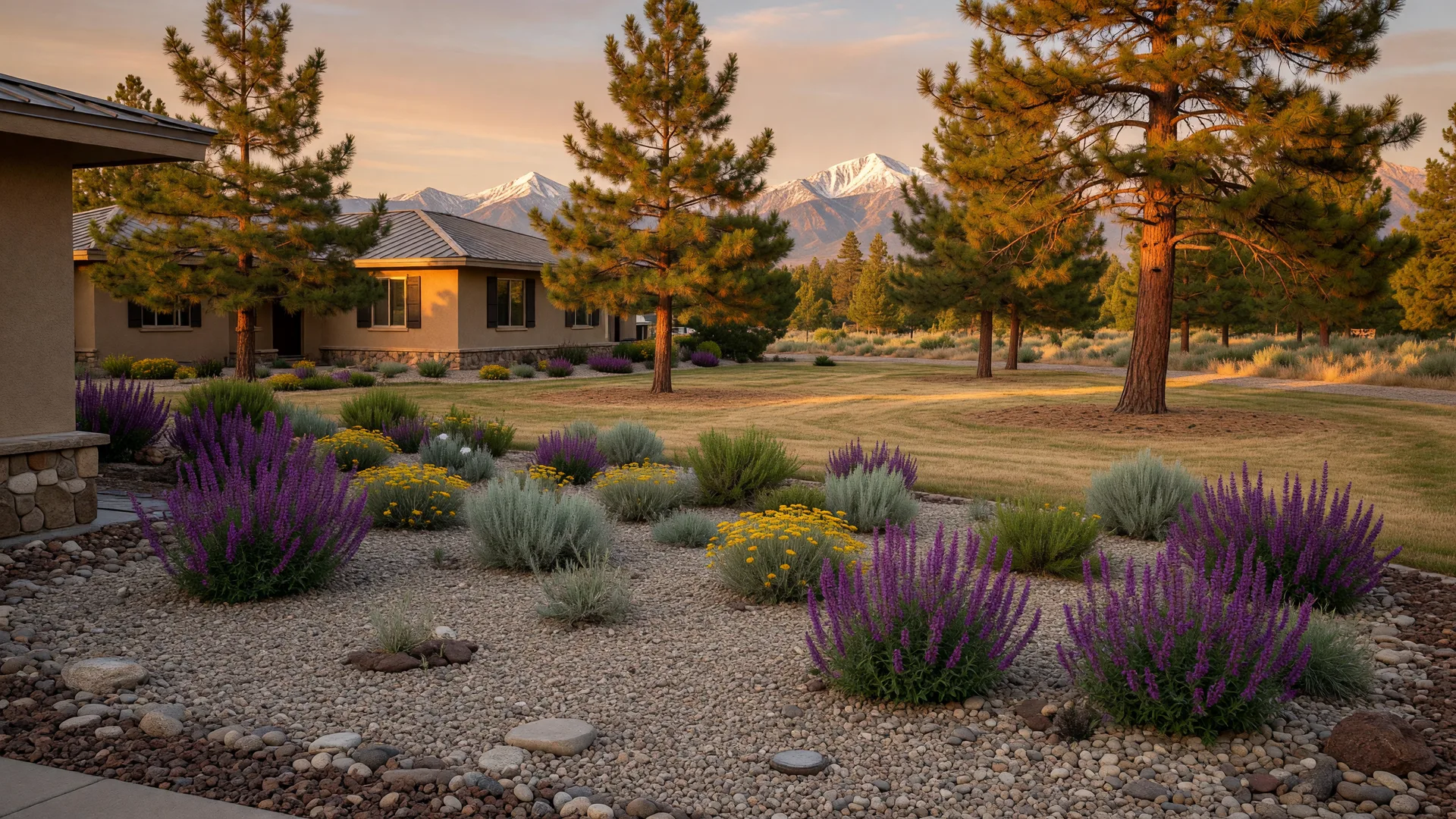
A beautiful Northern Nevada yard can do more than look great, it can help protect the home you love. Defensible space is simply the buffer around your home where vegetation is managed to reduce wildfire risk. Done well, it gives you peace of mind, a landscape that fits our dry climate, and room for firefighters to safely defend your home if they ever need to. The University of Nevada, Reno Extension has studied this for decades through its Living With Fire program, and the good news is the work is a series of small, satisfying projects.
The three zones, made simple
Living With Fire divides the space around a home into three friendly zones. Zone 0 is the first five feet, the ember-resistant zone right against your home: gravel or stone instead of bark mulch, no dead leaves in gutters, nothing combustible touching the siding. Zone 1 is 5 to 30 feet out, the lean, clean, and green zone: irrigated, low-growing plants, kept tidy and well-watered. Zone 2 runs 30 to 100 feet out, the reduced-fuel zone: trees spaced apart and limbs raised, grass mowed short. (Source: Living With Fire Defensible Space Guide, University of Nevada, Reno Extension)
Choose plants that are both beautiful and smart
Northern Nevada has gorgeous, drought-tolerant plants that also resist fire. Penstemon spires that hummingbirds love, yarrow, columbine, daylilies, and low ground covers like creeping thyme all do double duty: color and texture for you, low flammability for your land. Native species like sagebrush and rabbitbrush belong farther from the home, where they anchor the landscape in the reduced-fuel zone. Keep tree limbs at least 15 feet from chimneys and power lines, and skip junipers and other evergreens within 30 feet of the house. (Sources: Choosing the Right Plants for Northern Nevada's High Fire Hazard Areas, UNR Extension; Greenhouse Garden Center)
A place firefighters can defend
A well-planned buffer does two things at once: it slows a fire, and it gives firefighters a safe place to work. Keep driveways and access paths clear, make sure your address is visible from the road, stack firewood at least 30 feet from the house, and keep grass mowed to about 4 inches near structures. Around our high-desert communities, local fire districts generally require a buffer of 30 to 100 feet depending on the hazard area, so what applies to your home depends on your neighborhood. (Sources: Nevada State Fire Marshal homeowner checklist; each community's local fire district and wildland-urban interface code)
The peace-of-mind checklist
- Clear needles and leaves from the roof and gutters each spring and fall, a few minutes that pay off all year.
- Walk the first five feet of your home: no wood mulch, no stacked items, nothing combustible touching the siding.
- Trim lower branches so the ground is visible under trees, and keep shrubs from touching each other or the house.
- Check with your local fire district about requirements, and use the free Living With Fire guides at extension.unr.edu.
Defensible space requirements vary by county, community, and fire district in Nevada. This post draws on University of Nevada, Reno Extension Living With Fire guidance and local fire district materials, and is general information as of 2026.
A firesmart yard is one of the most valuable projects a Northern Nevada homeowner can take on, and it starts with the right lot. If you are weighing a move or a home purchase and want a property whose yard you can shape, book a free relocation consultation, or browse homes across Carson City, Dayton, the Valley, Reno, Sparks, and the Tahoe area.

Dennis Lindsay
Broker Associate · 40+ Years in Northern Nevada
Licensed in both California and Nevada, Dennis has helped over 800 families make the move from California to Northern Nevada. Call him at (530) 318-2369.
Planning Your Move to Northern Nevada?
Tell me where you are relocating from and your timeline, and I will help you line up the practical details and find a home that fits your budget.