
Tax Guide
Nevada Property Taxes by Town: What Your Annual Bill Really Looks Like
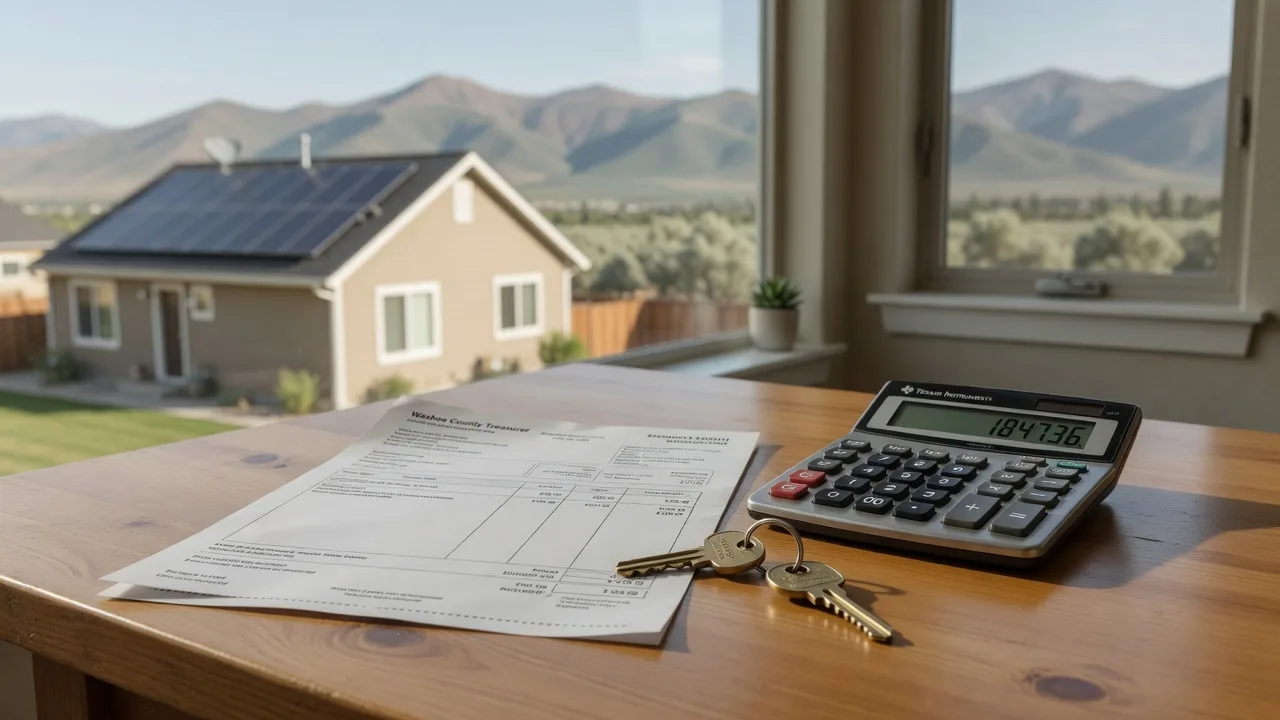
The shorthand you usually hear is that Nevada property taxes are low and grow slowly, but the details matter more than the slogan, especially for a first-year owner. Nevada assesses residential property at 35 percent of taxable value, applies a rate that varies by town, and caps the annual increase in your bill at 3 percent for an owner-occupied primary residence. The catch: a newly purchased home pays the full un-abated amount in year one, because the cap only starts to limit growth after that first bill. Here is what each Northern Nevada town actually charges, with current certified rates.
How the Formula Works
For a newly purchased home, Nevada sets the taxable value at your purchase price. The assessed value is 35 percent of that figure, which is the state's fixed residential ratio. Your bill is then the assessed value multiplied by your area's tax rate per $100 of assessed value, and every town adds its own layer of city, county, school, and special-district rates on top of the state's base levy.
The state caps combined rates at $3.64 per $100 of assessed value, and the year-over-year increase in your bill at 3 percent for an owner-occupied primary residence, or 8 percent for other property. That annual cap is what keeps long-held Nevada homes at bills far below today's market value. To get the cap, you need to file the primary-residence claim with the county assessor after you buy.
The Rates, Town by Town
These are the combined certified rates for the 2025-26 fiscal year, expressed per $100 of assessed value:
- Carson City: about $3.57 per $100, with the state-certified 2026-27 rate at $3.54.
- Gardnerville and Minden (Douglas County): $3.66 per $100 in both towns, with Gardnerville Ranchos at about $3.42 and unincorporated Douglas County around $2.81 to $2.87.
- Dayton (Lyon County, Central Lyon Fire District): about $3.40 to $3.49 per $100, with Fernley at roughly $3.28.
- Reno and Sparks (Washoe County): about $3.66 in Reno and $3.61 in Sparks when the county, school, state, and city rates are combined, with unincorporated Washoe running about $2.70 to $3.40.
Because a portion of every rate is the same statewide base, the spread between towns comes mostly from city and special-district levies, which is why the Carson Valley and Reno carry higher combined rates than outlying rural parcels.
What a Fresh Purchase Pays in Year One
Here is the math on real examples, assuming the full first-year amount with no abatement:
- A $450,000 home in Carson City. Assessed value is 35 percent, or $157,500. At $3.57 per $100, the first-year bill is about $5,623, and about $5,575 at the certified 2026-27 rate of $3.54. That works out to roughly 1.25 percent of the purchase price.
- A $500,000 home in Gardnerville. Assessed value is $175,000. At $3.66 per $100, the first-year bill is about $6,405, roughly 1.28 percent of the purchase price.
- A $500,000 home in Reno. Assessed value is $175,000. At the combined Washoe rate near $3.66, the first-year bill lands around $6,405 as well.
The key detail for California buyers: a sale removes the prior owner's abatement, so your first bill is recomputed from your purchase price at the full rate. The 3 percent cap begins to limit growth only from your second year onward, and only if you have filed the primary-residence claim. Our Nevada property tax guide explains the full system, and the exemptions and caps guide covers the assessor-filed relief available to veterans, disabled veterans, surviving spouses, and the blind.
Why the Average Looks Lower Than Your First Bill
You will often see Nevada quoted with an average effective property tax rate near 0.6 percent, and that figure is real, but it is a median across all homes. Because bills are capped at 3 percent annual growth, homeowners who bought years ago carry bills far below what current market value would produce, which drags the average down. Property tax trackers put the typical effective rate on market value at about 0.65 percent in Carson City and Reno, around 0.6 to 0.7 percent in Dayton, and roughly 1.0 to 1.1 percent in the Carson Valley. A brand-new buyer pays closer to the full rate in year one, then watches growth slow to the cap.
How It Really Compares to California
On a fresh purchase, a California home also reassesses to its purchase price, with a base rate of about 1 percent plus local voter-approved bonds and assessments, so first-year bills in the two states land in a similar range. The places Nevada pulls ahead for a transplant show up elsewhere: no state income tax on wages or retirement income, no inheritance tax, and no estate tax. That recurring income-tax savings is the real headline, and it is worth reading alongside the no state income tax page and the property tax savings page.
The cost of living page stacks the full monthly picture side by side, and the Carson City cost of living post and Carson Valley cost of living post drill into the towns with the widest spread in rates.
The Takeaway
Budget for a first-year property tax bill of roughly 1.1 to 1.3 percent of your purchase price depending on the town, then watch it grow at most 3 percent a year from there. Rates shift slightly each fiscal year and can vary by special district, so the county assessor's office is the final word on a specific parcel. If you are comparing towns, get a current estimate for the exact address before you make an offer, and pair it with the income-tax savings that make the move work.
Want the tax picture for a specific home or neighborhood? Book a free relocation consultation, and when you are ready, browse homes across Carson City, Dayton, the Valley, Reno, Sparks, and the Tahoe area.
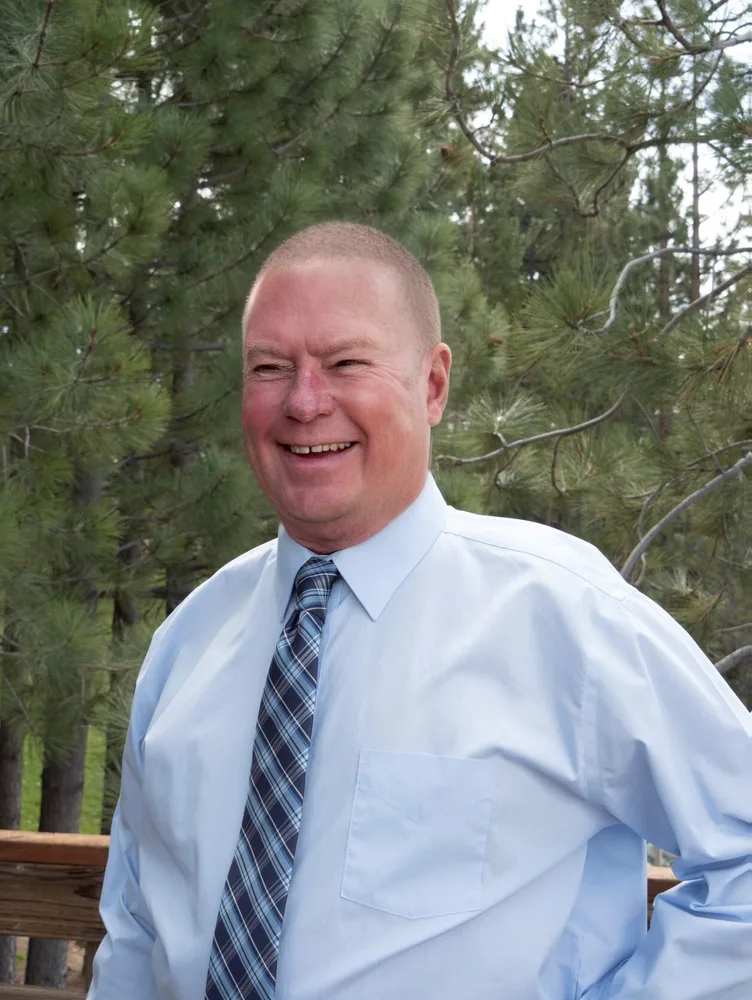
Dennis Lindsay
Broker Associate · 40+ Years in Northern Nevada
Licensed in both California and Nevada, Dennis helps California transplants compare towns with the real numbers, including the tax bill on a specific property. Call him at (530) 318-2369.
Want a Property Tax Estimate for a Specific Home?
Tell me the town and price range you are considering, and I will help you estimate the first-year bill and connect you with the county assessor's numbers.