

Buying Guide
Buying a Home in Northern Nevada in Winter: What Actually Changes
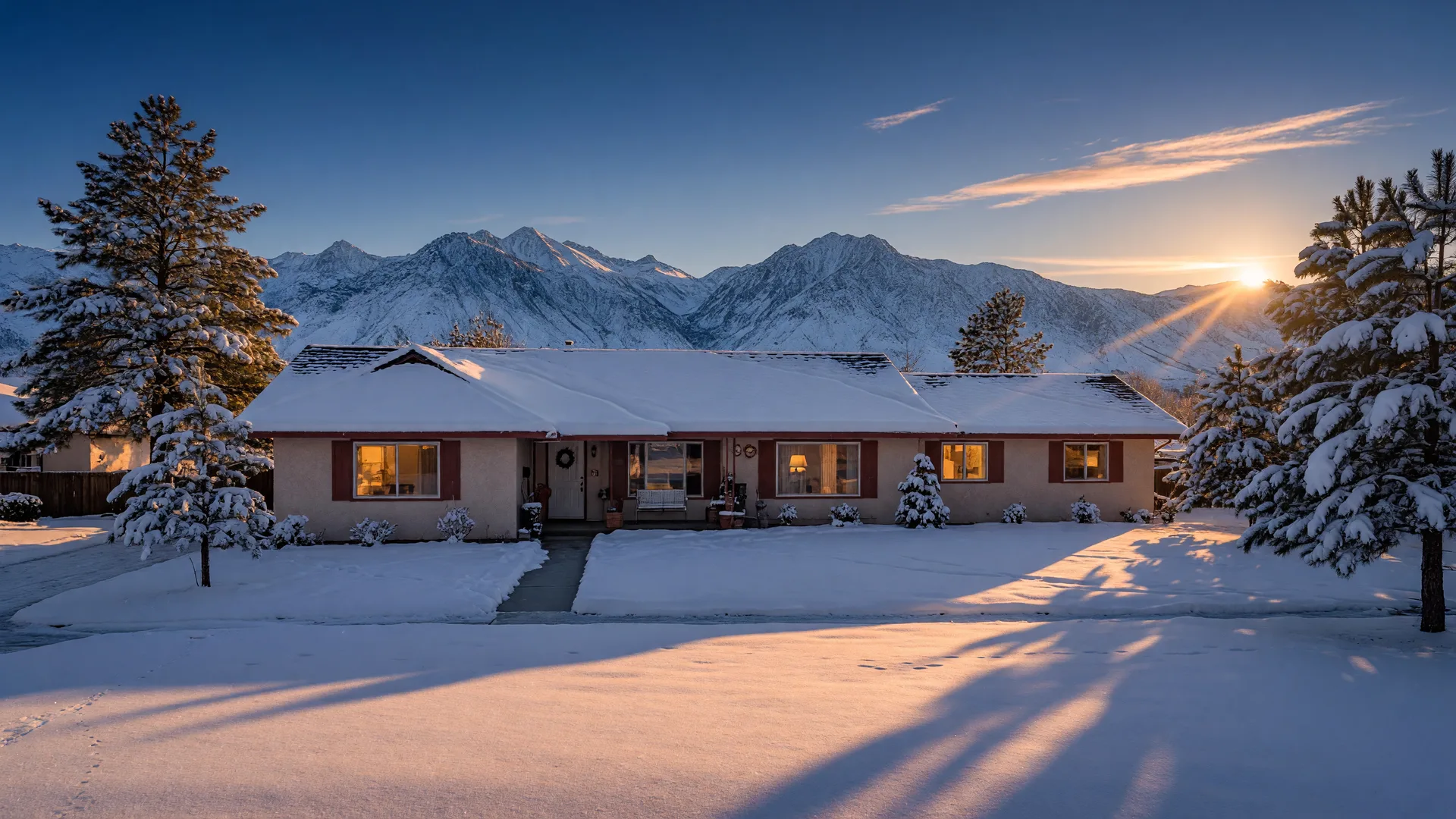
Winter is the quietest season in the Northern Nevada housing market, and for some California transplants that is exactly the point. Between December and February, new listings and buyer competition both hit their yearly lows, which means more time to look, fewer competing offers, and more room to negotiate. The trade-offs are practical ones: colder inspections, snow on the roads, and a move that takes a little more planning. Here is what the off-season market really looks like, what the weather does to the buying process, and the checklist that gets you to a spring move.
What the Winter Market Actually Looks Like
Northern Nevada real estate follows the seasons, and the winter trough shows up clearly in recent market reports. In Reno-Sparks, active listings fell to about 971 homes in December 2025 and about 856 in January 2026, the low point of the year, with roughly 2.1 to 2.5 months of supply. Homes also sat on the market longer in winter: the Reno metro median days on market ran about 78 days in December 2025 and 81 in January 2026, compared with 46 in March 2026 as the spring pickup began.
Even so, this is not a bargain-bin market. Sellers in the Reno-Sparks area still closed at roughly 98 to 99 percent of asking price through the winter months, and homes averaged about two offers. What winter really gives you is time and leverage, not automatic discounts.
Carson City runs on the same calendar at a smaller scale: active inventory dropped to about 94 listings in December 2024 and 127 in January 2025, and June is actually the fastest-selling month of the year there, with a median of about 48 days on market in June 2026. In Douglas County, the Carson Valley side, winter volume is thin: roughly 31 sales closed in December 2024, with the county median down about 9.5 percent from the month before.
Those figures come from the most recent winter reporting cycles, 2024-25 and 2025-26, and every year is different. Treat them as the shape of the season, not a promise, and ask me for the current numbers for whatever town you are watching.
What December Really Feels Like, and How Much It Snows
December is genuinely wintry in the valley towns where most California transplants land. On NOAA's 1991 to 2020 climate normals, Reno's average December high is about 47°F with an average low of 26°F and about 5.2 inches of snow for the whole month. Carson City runs a touch cooler and snowier: an average high near 45°F, an average low near 24°F, and about 6.4 inches of snow.
Valley snow comes and goes within days, while the mountains take many times more, so the town-by-town snow guide is a good read before you pick a commute, and the Carson City snowfall breakdown has the monthly detail. The short version: on a December house hunt you will drive on plowed but sometimes icy streets, tour homes in boots, and see short, cold afternoons. It is manageable, and it reveals a side of each home that a June visit simply cannot.
A Winter Inspection Tells the Honest Story
January is the one month of the year when a house shows you its real self. A few inches of snow on the roof is a perfect test of insulation and attic ventilation, because you can watch where it melts and where it hangs on. Grading and drainage failures show up as ice dams, soggy corners, and water finding its way where it should not. The furnace gets a genuine workout, which is exactly when it will let you know its age. Frozen pipes on an exterior wall announce themselves loudly, and it is far better to learn that before you own the house than after.
The Northern Nevada home inspection guide runs through what a standard inspection covers plus the regional add-ons like radon, wells, and septic. In winter, budget for the cold-weather checks too: roof under snow, chimney and flue, furnace age and service record, insulation depth, and how the driveway and walkways drain when the ground is saturated. A seller who keeps a warm, dry, well-drained home in January is telling you something useful.
Moving in Winter: The Logistics to Plan Around
Snow, cold, and short days change the mechanics of a move more than most California transplants expect. Book the moving crew with buffer days in case the passes close, keep a shovel and ice melt at both ends, and lay down runners or cardboard so wet boots do not wreck floors. Disconnect and drain the outdoor hoses before closing day, because a frozen exterior faucet is a classic first-week surprise. If you will still commute across the Sierra to California, chain-control season on I-80 and US-50 is real even with all-wheel drive, and the winter driving guide explains the R-1, R-2, and R-3 rules. The first winter guide and the winterizing checklist cover the home side, and the moving checklist keeps the whole thing in order.
Buying Across State Lines Works the Same Way in January
None of the remote buying tools stop for snow. Virtual tours, video walkthroughs, digital offers, and remote closings all work just as well in February as they do in August, and Nevada's escrow process is built for out-of-state buyers. The guide to buying from California walks through the remote process, virtual tours, cross-state loans, and what to know about Nevada HOAs, and the closing costs guide has the cash you will need beyond the down payment.
The overall math does not change with the calendar either: Nevada's no state income tax and lower typical property tax bills are year-round advantages, and the cost of living comparison shows where the everyday savings come from. If you are aiming under a specific budget, the under $450,000 guide lines up what that buys in each town.
Why Some California Transplants Prefer the Off-Season
Three honest reasons a winter purchase works well for people moving from California:
- Less competition. Fewer buyers are out in December and January, so you are less likely to lose a home you love to a multiple-offer race. The trade-off is a smaller selection of available homes.
- The calendar lines up. Close in January or February and you are settled in time for spring, summer, and the long play of the year. Sellers who list right before the holidays are usually motivated, because nobody puts a house on the market in December for fun.
- You see the real winter. Buying a home before you have experienced a Sierra winter is how people end up surprised. Buying during one means you know exactly what you are getting, from driveway slope to furnace output to snow removal on the street.
If the widest selection matters more to you than leverage, spring delivers volume at the price of competition. There is no wrong season, only the wrong one for your plan, and the where to live guide is a good companion while you decide which towns deserve a winter drive.
The Winter Buying Checklist
- Get pre-approved before you look. Winter inventory is thin, so when the right house appears, you want to be ready to move the same week.
- Budget for real winter utilities. Heating a 4,600-foot-elevation home costs more than a Bay Area bill, and the winter energy guide has the typical numbers for power and gas.
- Add the cold-weather inspections. Roof, furnace, chimney, insulation, and grading under snow, on top of the standard inspection.
- Ask who plows what. City street, county road, HOA-maintained lane, private driveway: each has a different snow arrangement, and it is worth knowing before a storm hits.
- Plan the move with buffer days. A March storm can close Donner Summit and Spooner Summit for hours; build in a day or two of slack on both ends.
- Compare towns on paper first. Drive them in winter, but start with the community guide so the visits are efficient.
A winter purchase is not easier or harder than a summer one, it is simply different, and the difference mostly works in the buyer's favor. If you are weighing an off-season move, the FAQ answers the common cross-border questions, request the homes that fit what you are looking for, and a call with me can line up a winter tour, snow boots and all.

Dennis Lindsay
Broker Associate · 40+ Years in Northern Nevada
Licensed in both California and Nevada, Dennis has helped over 800 families make the move from California to Northern Nevada, and he has sold homes in every season. Call him at (530) 318-2369.
Thinking About a Winter Move?
Tell me what you are looking for and your ideal timeline, and I'll help you find a Northern Nevada home in the season that works for you.